
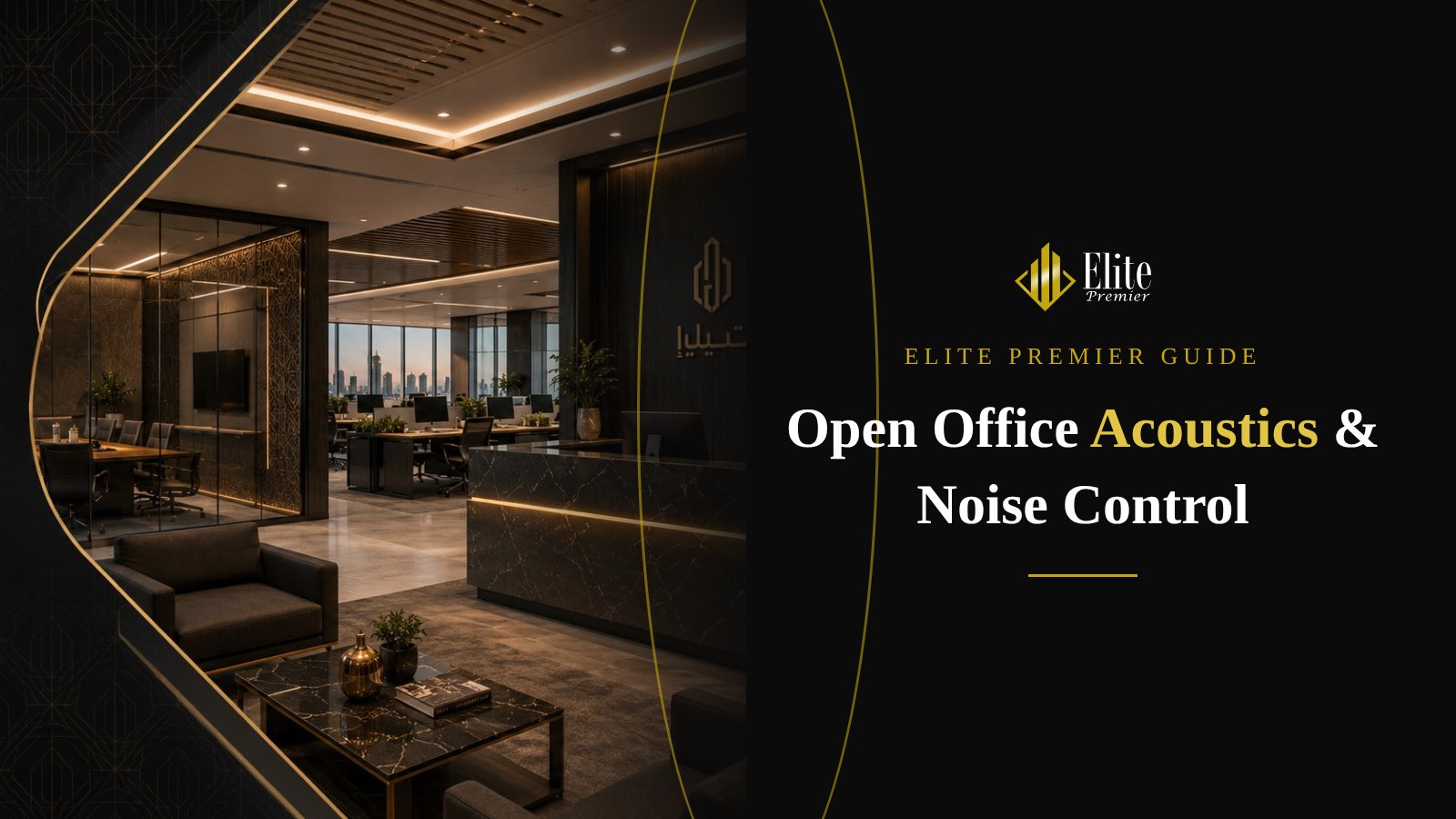
Open-plan offices save space and make communication easy, but they come with a problem everyone who has worked in one knows: noise. A loud phone call, a side conversation, the printer or echo in the room all break concentration and make deep work harder. The good news is that fixing it does not mean going back to cellular offices. This guide explains open office acoustics and office noise control in practical terms, and how furniture and layout help create a calmer workplace.
- The difference between sound insulation and acoustic treatment, and why you need both.
- The ABC principle of noise control: absorb, block, cover.
- Practical solutions: panels, partitions, phone booths, ceilings and floors.
- How smart furniture layout reduces noise at little extra cost.
- Simple policies and behaviours that complete the design.
Why noise is a real problem in open offices
The human brain is wired to pay attention to sounds around it, especially intelligible speech. When someone hears a clear conversation nearby, part of their attention follows it automatically, even if they do not want it to. That is why nearby conversations are more disturbing than steady background noise such as air-conditioning. As these interruptions repeat through the day, deep focus becomes almost impossible and people end the day more mentally tired.
The problem grows in modern offices built with hard surfaces: porcelain floors, glass walls, exposed ceilings and smooth furniture. These surfaces reflect sound instead of absorbing it, so echo builds up and overall noise rises. With video meetings and online calls now part of daily work, a good acoustic environment matters more than ever.
Sound insulation or acoustic treatment?
The two terms are often used interchangeably, but they are different:
🧱
Sound insulation
Stops sound travelling from one space to another, such as keeping a meeting room conversation private. It relies on walls, doors, double glazing and sealed gaps.
🧽
Acoustic treatment
Improves sound quality within a space by reducing echo and reflections, using absorptive materials on walls, ceilings and furniture.
In an open office, acoustic treatment comes first because there are no walls to insulate. In meeting rooms, private offices and call rooms, insulation becomes essential for privacy. A complete solution combines both.
The ABC principle of noise control
Workplace designers organise acoustic solutions with a simple rule known as ABC:
A – Absorb
Use sound-absorbing materials on ceilings, walls and furniture to reduce reflections and echo, so sound fades before it reaches others.
B – Block
Place barriers between the source and the listener: partitions, tall storage, booths and insulated glass walls.
C – Cover
Add a soft, steady background sound, such as sound-masking systems or gentle natural sounds, which makes distant speech less intelligible and less distracting.
One element alone is rarely enough. Partitions alone do not stop echo, and panels alone do not stop direct sound. The best results come from combining all three in proportions that suit the office.
Diagnose before you treat
Not all noise problems are alike, and the right solution starts with an accurate diagnosis. Ask staff what bothers them: general echo, particular colleagues’ calls, sound leaking from the meeting room, or printer and pantry noise? Each answer leads to a different fix. Echo needs absorption on ceilings and walls, calls need booths and clear etiquette, leaks need better insulation and fixed sources need relocation. Sound-meter apps can give rough readings at different times of day, and on larger projects an acoustic consultant can measure reverberation time and specify how much absorption is needed. Investing in diagnosis saves money that might otherwise go on solutions that miss the real cause.
Acoustic solutions by type of space
📞
Contact centres
Tall absorptive screens between stations, a fully absorptive ceiling and carpet, because speech is constant all day.
💻
Software and analysis teams
Quiet zones away from circulation, focus rooms and good echo control.
🎓
Training rooms
Clear trainer speech, with treated rear walls to stop echo and good insulation from nearby offices.
🏛️
Public service halls
Absorptive ceilings and screens between service windows to protect visitor privacy. See government office furniture.
Acoustic treatment for open offices
Sound-absorbing ceilings
The ceiling is the largest unused surface in an office, and treating it is one of the most effective measures. Options include acoustic ceiling tiles, suspended baffles or acoustic islands above work areas. In offices with exposed ceilings, decorative suspended panels add character as well as performance. When choosing materials we look at the noise reduction coefficient (NRC); the higher it is, the more sound the material absorbs.
Acoustic wall panels
Felt, acoustic fabric or perforated timber panels mounted on walls, especially walls facing work areas and in meeting rooms. They can be designed in brand colors or geometric patterns to become a decorative feature. See our office color guide.
Floors
Carpet and rugs absorb footsteps and chair movement far better than porcelain or marble. If hard floors cannot be changed, add rugs in work and meeting areas and use suitable chair castors and rubber glides on furniture.
Furniture as an acoustic tool
Upholstered furniture, high-back sofas, curtains and fabric-covered storage all help absorb sound. Modern offices can choose furniture designed for acoustics, such as high-wing sofas that create a quiet nook inside an open space.
Blocking solutions: partitions and booths
Office partitions
Partitions between workstations block part of the direct sound and give people a sense of privacy. To work acoustically they should be covered with absorptive material (fabric or felt), not only glass or metal, and in focus areas be tall enough to rise above head height when seated.
Phone booths and focus rooms
Phone booths are among the most popular solutions in modern offices because they move calls and video meetings out of the open area into an enclosed space. Small focus rooms can be added for work that needs complete quiet. These small spaces improve the environment for everyone because the biggest source of disturbance leaves the shared area.
Storage as a barrier
Tall cabinets and shelving can divide the office into zones and block sound between them while adding storage. With acoustic panels on the back, they become a double solution.
| Solution | Type | Where | Expected effect |
|---|---|---|---|
| Acoustic ceiling panels | Absorb | Open offices and halls | Less echo and lower overall noise |
| Wall panels | Absorb | Walls facing work and meeting areas | Clearer sound, less echo |
| Carpet and rugs | Absorb | Work areas and corridors | Fewer footstep and chair noises |
| Absorptive partitions | Block and absorb | Between workstations | Privacy and less direct sound |
| Phone booths | Insulate | Inside the open area | Calls moved away from the team |
| Double glazing and sealed doors | Insulate | Meeting rooms and private offices | Confidential conversations |
| Sound masking | Cover | Large offices | Less intelligible distant speech |
Smart furniture layout to reduce noise
Before investing in acoustic materials, you can gain a lot by rethinking the layout. Acoustic planning means zoning the office by noise level:
- Quiet zones: for focused work, away from the entrance, pantry and printers.
- Collaboration zones: for discussion and teamwork, ideally between quiet zones and circulation.
- Noisy zones: pantry, printers and reception, placed at the edges or near the entrance.
- Buffer zones: storage, plants or corridors separating areas.
It also helps to avoid seating people directly face to face without a screen, and to keep phone-heavy teams such as sales or customer service away from teams that need high focus such as finance or software. This planning is part of our office design service.
💡 Elite tip: Place meeting rooms and phone booths between quiet and noisy zones; they act as a natural acoustic buffer and stay within easy reach of everyone.
Insulating meeting rooms and private offices
In meeting rooms and executive offices, privacy is a priority. Conversations heard clearly outside a meeting room cause embarrassment and can expose sensitive information. To improve insulation:
- Build walls from floor to the structural slab, not just to the suspended ceiling, because sound travels over the top.
- Choose double or laminated glass for glazed walls.
- Install solid or sealed glass doors with acoustic seals.
- Treat HVAC and service openings that can carry sound between rooms.
- Add absorptive materials inside the room to reduce echo and improve video calls.
Video meetings: a new acoustic challenge
Video meetings are now part of daily work and put extra pressure on the acoustic environment. Someone on a video call at their open-plan desk disturbs colleagues while their microphone picks up everyone else. A modern office needs enough dedicated spaces for this: single booths, small two-person rooms and properly treated meeting rooms. This trend is closely linked to hybrid working; read our hybrid office design guide.
Policies and behaviours that complete the design
Good design solves much of the problem, but office culture does the rest. Simple practices that help:
- Agree to use booths for long calls and video meetings.
- Mark clear quiet zones with simple signage.
- Use headphones for any audio content.
- Keep phone and device notification sounds low.
- Move long side discussions to collaboration areas.
Improving acoustics in an existing office
You do not need to rebuild your office to improve acoustics. In office refurbishment projects, clear gains come from adding suspended panels, replacing low glass screens with absorptive partitions, adding phone booths and re-zoning teams by the nature of their work. These improvements can be phased without stopping work.
Balancing quiet and collaboration
The aim of acoustic treatment is not to turn the office into a silent library; a very quiet office makes every small sound noticeable and can discourage people from talking. The goal is balance: quiet zones for focus, lively zones for collaboration and dedicated spaces for calls. When everyone can find the right place for each task, productivity and satisfaction improve together.
Common office noise mistakes
- Relying on glass partitions alone, assuming they insulate sound.
- Ignoring the ceiling, the largest reflective surface.
- Placing printers and pantries in the middle of work areas.
- Providing no spaces for calls and video meetings.
- Building meeting room walls only up to the suspended ceiling.
- Choosing only hard, glossy surfaces with no absorption.
Conclusion: a balanced acoustic environment makes the difference
Open-office noise can be solved with a clear plan: diagnose the source, apply absorb, block and cover, zone the office by quietness and provide spaces for calls and video meetings. You keep the benefits of openness without your team paying for it in lost focus.
Struggling with noise in your open office?
We re-plan your office and supply partitions, storage and furniture that support a calmer workplace, delivered in phases without stopping work.
Frequently asked questions
What is the difference between sound insulation and acoustic treatment?
Insulation stops sound travelling between spaces such as meeting rooms; acoustic treatment reduces echo and reflections within a space using absorptive materials.
How can I reduce noise in an open office?
Combine absorptive ceilings and walls, absorptive partitions between desks, phone booths and a layout zoned into quiet, collaborative and noisy areas.
Do glass partitions block sound?
Glass blocks some sound but also reflects it, so absorptive materials are still needed; double glazing works better for meeting rooms.
What are office phone booths?
Small enclosed units inside an open office used for calls and video meetings away from the rest of the team.
Can acoustics be improved without construction?
Yes: suspended panels, rugs, upholstered furniture, absorptive partitions and re-zoning teams, all of which can be phased.
Do you manufacture acoustic office partitions?
Yes. We design and manufacture partitions and storage units with finishes and claddings that help improve office acoustics.
Related services and guides: office partitions and call centre furniture.